Every Hole at Augusta National - No. 15 Firethorn
History, Masters strategy, and expert commentary on the par-5 15th

The Basics
Par 5 | 550 yards
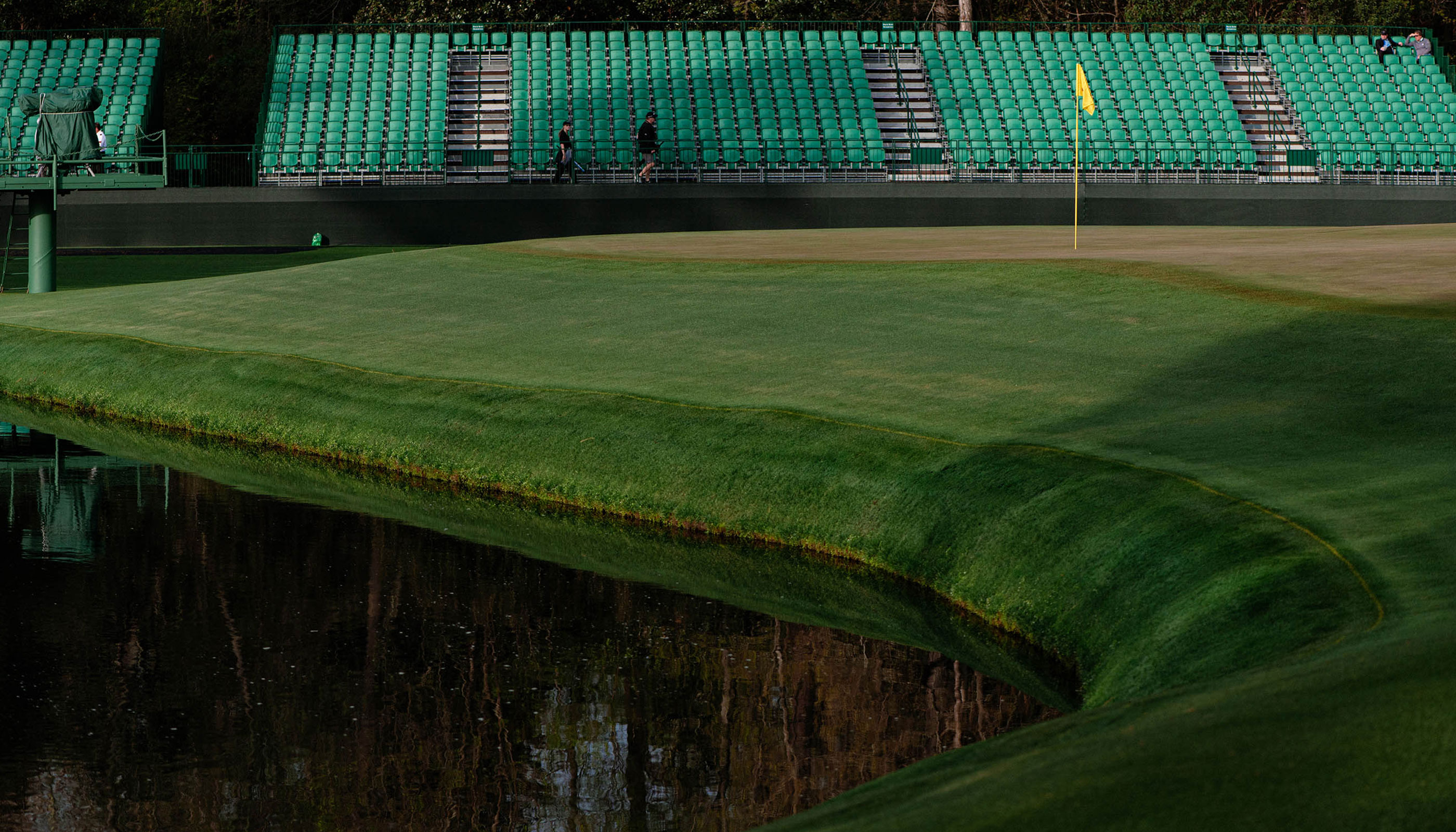
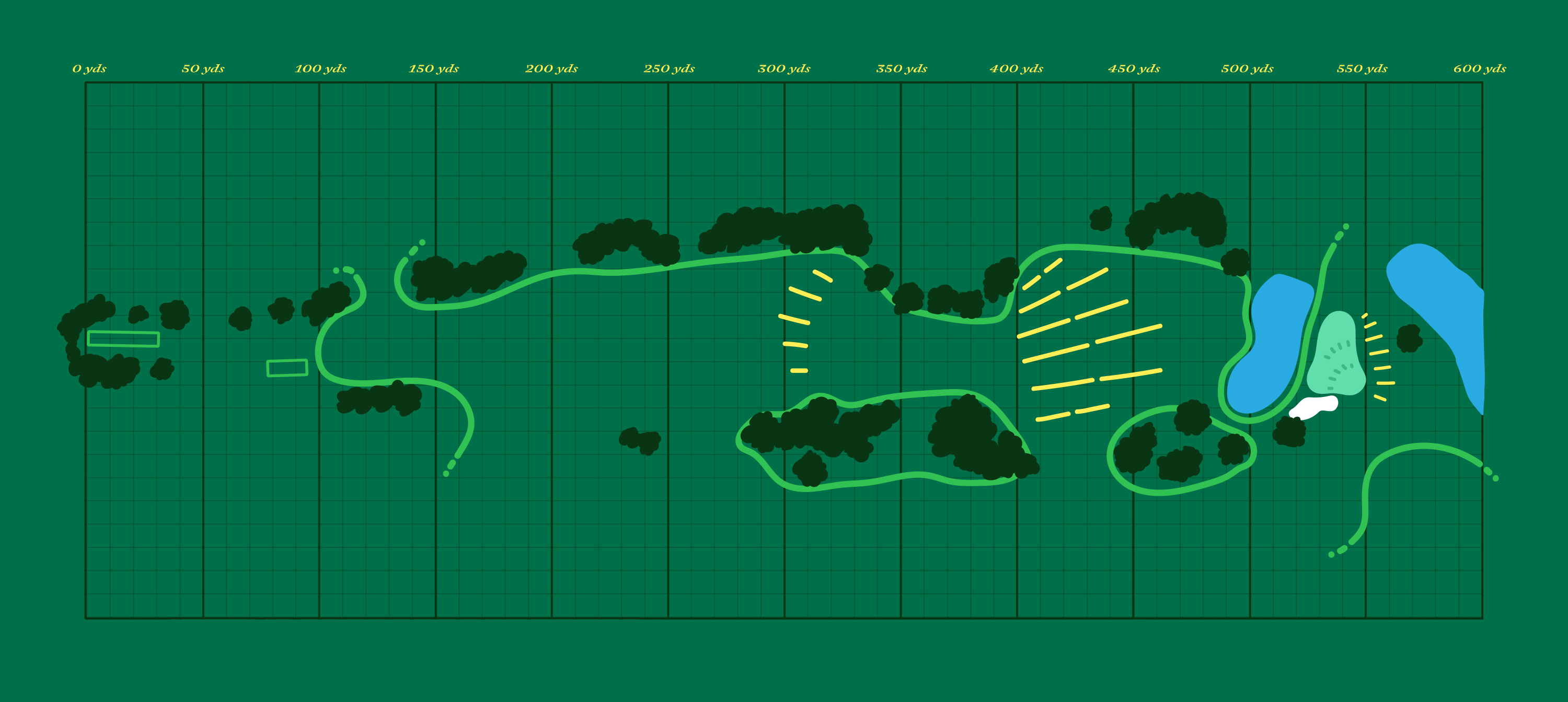
This scoreable but treacherous par 5 plays up and over the foot of the central hill where the second, seventh, and 17th greens are situated. The ideal tee shot travels through a right-center window, lands on the crest of the rise, and kicks forward. Those who fail to reach the top of the bulge will have a long way to get home in two. Players who miss left will find themselves blocked out by a cluster of towering pines. Even from those positions, however, many will still try to reach the green in order to avoid one of the most nerve-wracking third shots in golf: a wedge from a downhill lie to a shallow, tilted green perched between two ponds. Pins on the left, where the green is shallowest, are especially daunting, demanding ultra-precise distance and spin control. Balls that come up short or fly long make for good television at the Masters, often rolling down the closely mown banks — first slowly, then with inevitable speed — into the water.
{{every-hole-augusta-national-15-firethorn}}
History
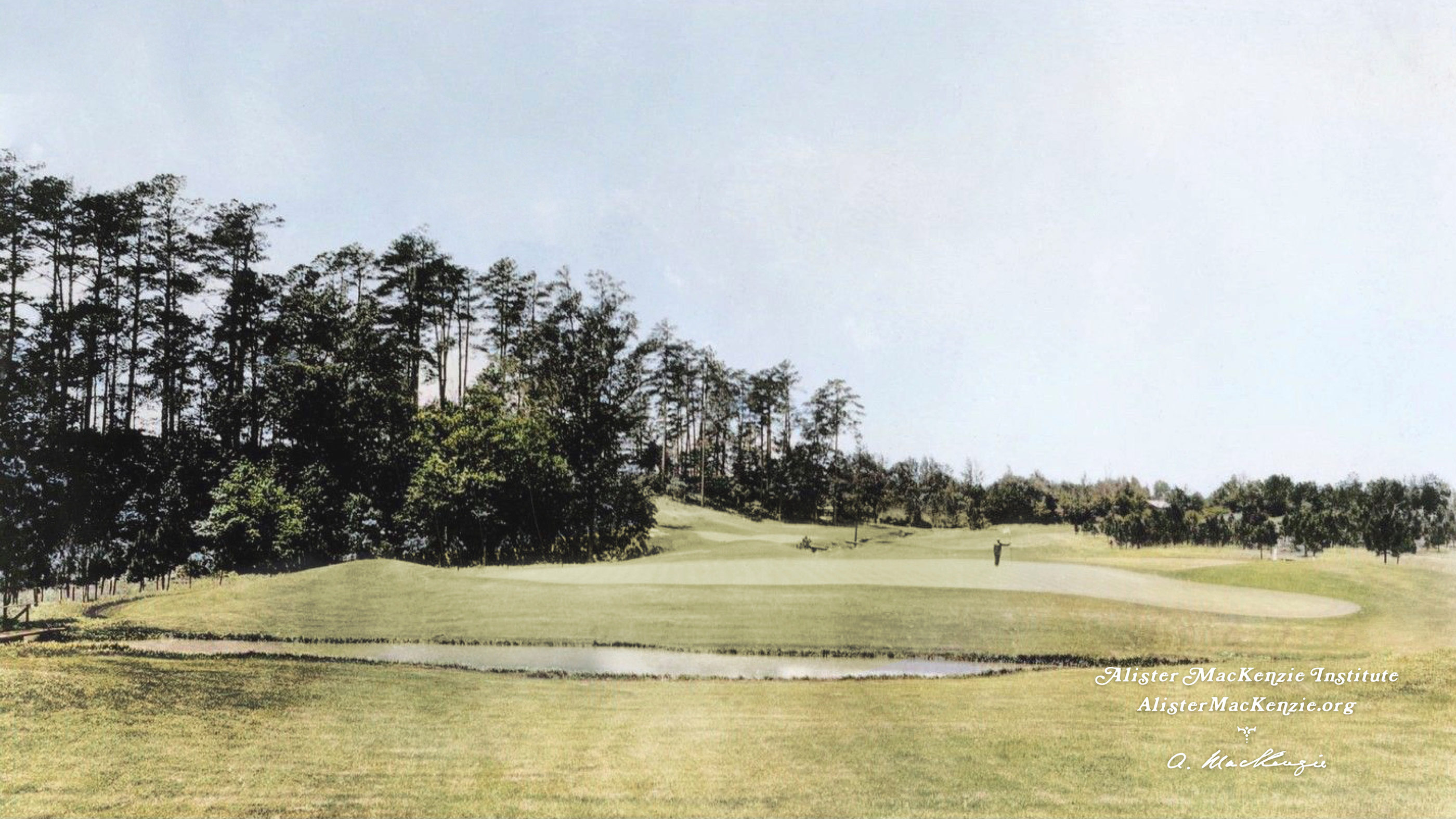
Originally, the 15th fairway was the widest and least defended at Augusta National. The only trouble was a group of trees in the middle. (These, or perhaps their descendants, now define the left edge of the playing corridor.) As Bobby Jones put it in 1959, "The tee shot may be hit almost anywhere with safety."
Over the last three decades of the 20th century, however, the club added dozens of trees to both sides of the fairway, creating a bottleneck in the landing zone for drives. The green and its surrounds have also undergone a dramatic evolution. The fronting water hazard was once a skinny stream diverted from the tributary of Rae's Creek. Between the late 1940s and the early 1960s, Augusta National dammed and reshaped this feature into a 20-yard-deep pond. In addition, the club added the right greenside bunker in 1957, on Ben Hogan's recommendation.
Strategy Notes for the Masters
No. 15 consistently presents one of the toughest decisions players have to make during their rounds: go for the green in two or lay up to one of the most demanding wedge shots in golf. In firm conditions, there is little margin for error when trying to land a high-trajectory long approach on the front half of the green that doesn’t bounce and roll over the back. Players also cannot simply club up to take the water short out of play, as shots that carry the back edge of the green can bound down into the water hazard between the 16th tee and green.
One more thing to watch: many players fire second shots right, into the green-side bunker — or even right of it into the gallery — leaving a fairly easy pitch with plenty of green to work with. Compared to a testy wedge from a downhill lie in the fairway, it can be, somewhat unfortunately, an appealing option, depending on a player’s position in the fairway. –Joseph LaMagna
Our Take
If he were alive today, Alister MacKenzie would likely have a hard time recognizing this narrow, bracingly severe, almost goofy version of this hole. But there’s no denying that “Firethorn” has created its share of unforgettable Masters moments. Just as much as the tee shot on No. 12, the approach to the terrifying 15th green is a defining test that every prospective champion must pass on Sunday. It is one of the most exciting shots in the game — an American answer to the approach to the Road green.
Expert Commentary
Alister MacKenzie (1932): “This is a three-shot hole to most golfers. A stream has been diverted so as to form a similar loop to the first hole of St. Andrews. It is not only an interesting three-shot hole, as one will be maneuvering for position from the tee shot onwards, but also a magnificent two-shot hole, as a skillful and courageous player, aided by a large hillock to the right of the loop of the stream, will be able to pull his second shot around to the green.”
Bobby Jones (1959): “The fairway of this hole is quite wide. The short rough on the left is far removed from the line of play, and there is no demarcation on the right between the fairway of the 15th and that of the 17th. The tee shot may be hit almost anywhere with safety. It is nevertheless of considerable importance that the line of play be along the crest of the hill, a little to the right of the center of the fairway. This fairway, being on high ground, usually provides more run to the ball than most other holes of the course. It is also more exposed to the effect of any wind which may be present. Two tees, front and back, are provided so that the length may be adjusted within wide limits according to playing condition. The design of the green causes it to be most receptive to a second shot played from the right center of the fairway. The left side is quite shallow, considering the length of the second shot, and the most severe hazards lie here. A ball played over the green on this side may very well run down into the pond at the 16th hole. It is usually the better part of wisdom to play the second for the main body of the green, even though the hole may be cut on the left side. Under almost any conceivable conditions, the second shot to this hole suggests precarious possibilities. With the wind against, the player must decide whether his power and the state of the game warrant an effort to reach. With a following wind, he may have to consider whether he will be able to hold the green, even though it be well within reach. Billy Joe Patton’s magnificent bid to be the first amateur to win the Masters ended when he tried to reach this green from the rough on the left. The ball finished in the pond. The resulting 6 was one too many. Had he played safely for a 5, he would have tied with Snead and Hogan.”
Geoff Ogilvy (2019): “It’s the hole where, on the tee, you do everything you can to be able to go for it in two. Because as hard as that second shot is, and as much trouble as there is with that second shot, getting it over the water in two and on dry land is preferable to anything short of the water. There is nothing good short of the water. It is the hardest wedge in golf by a long stretch…. The instinct when the pin on the left is to lay it up down the right. You feel like you can kind of create a bit more room on the green. But the further right you are on the fairway with that wedge shot from 100 yards or 80 yards, you are landing it on a pretty significant downslope of the green from right to left. And that first bounce is so big, that if you land it anywhere near the pin, it’s just one bounce and over the back…. I would go out of my way to lay it up as far left as I can. Even the semi-rough is better than anywhere on the right. The further left you are, the flatter your stance. If you go way left and have a distance where you can get some spin, even to that back-left pin, you can hit a pitch that lands 20 or 30 feet right of it and spins left because it comes back down the hill.”
Memorable Shots
Rory McIlroy’s approach in the final round of 2025: You can make a good case this is one of the most consequential shots in golf history. McIlroy was reeling, having just doubled 13 and bogeyed 14. The career Grand Slam was slipping away. And then, somehow, he flipped the script with what Jim Nantz appropriately called “The shot of a lifetime.”
Gene Sarazen’s “Shot Heard ’Round the World” in 1935: With four holes to play, Sarazen was trailing Craig Wood by three shots in the second edition of the Masters. Supposedly Walter Hagen told Sarazen his chances of winning were dim, to which Sarazen replied, “Oh I don’t know. They might go in from anywhere.” He then sent a 4-wood toward the 15th green, where it hopped into the cup. It helped him get into a playoff, where he beat Wood by five shots in a 36-hole playoff the following day. In doing so, he completed what came to be known as the Career Grand Slam.
Seve Ballesteros’ water ball in 1986: A lot of things had to happen for Nicklaus to win his sixth green jacket, and one of them was that Ballesteros had to cough up the lead. Right after Nicklaus made birdie on 16 to pull within a shot, it was Seve’s turn to hit his second shot on 15. He hit one of the worst 4-irons of his life, a fat pull hook into the pond. The miss haunted him for decades. "Sometimes when I think back to the 1986 Masters I can't stop myself from crying silent tears,” he said in his autobiography.
Tiger Woods takes a bad drop in 2013: Woods was just a shot off the lead on Friday when he came to the 15th hole. A poor drive forced him to lay up, but he hit what looked like a perfect wedge for his third. When the ball hit the pin and ricocheted back into the water, it kicked off one of the most controversial rules decisions in Masters history. Woods admitted in an interview with ESPN after the round that he’d taken a drop a yard back from where he hit his third shot, a violation of the rules. But by then, he’d already signed his scorecard. Fred Ridley, now the Masters chairman but at the time the head of the Competition Committee, intervened to keep him in the tournament even though he could have been disqualified under the rules. Woods never recovered and finished four shots out of a playoff.
Course Routing
Click on a pin below to preview the hole or go to the full profile of the hole.
Augusta National
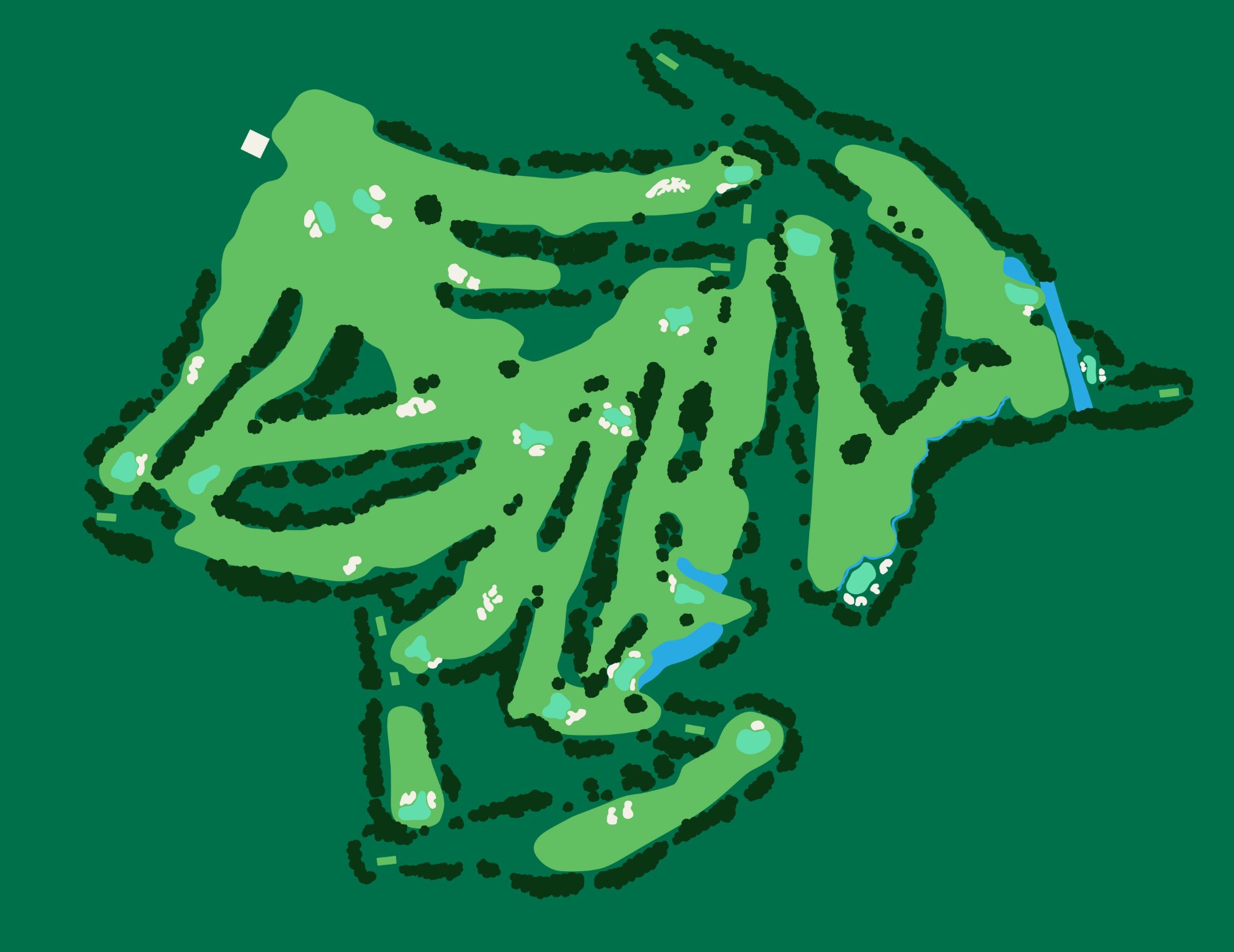
Ever since it opened, Augusta National has been in a constant state of evolution (for better or for worse), but it remains one of the greatest championship venues in the world
Hole 1 - Tea Olive
Augusta National's property is defined by a single broad downslope that ends at Rae’s Creek, and this par-4 opener is the only hole on the course that sits completely on top of it. Strategically, No. 1 at Augusta National is one of the most compelling opening holes in professional golf.
Hole 2 - Pink Dogwood
The second hole at Augusta National produces more off-the-tee variety than most par 5s in professional golf.
Hole 3 - Flowering Peach
Players face three basic options off the tee: hit a long iron or hybrid near the bunkers at the top of the first ridge, leaving a full wedge in; bash it left, past the bunkers and into the valley short left of the green; or go straight for the green in hopes of at least holding the narrow shelf short right. The most strategically complex hole on the golf course, “Flowering Peach” has stood the test of time, less affected by distance gains than most holes at Augusta National.
Hole 4 - Flowering Crab Apple
The first — and longest — par 3 at Augusta National has historically required a strong strike with at least a long iron, though club selections in the Masters have shifted as distance gains have spiraled out of control. Can you execute a towering shot with a long iron, hybrid, or fairway wood?
Hole 5 - Magnolia
“Magnolia” is like Paul Thomas Anderson’s film of the same name: brilliant, probably underrated, but a tad bloated. Nonetheless, the hole presents an honest challenge, and the green is one of the most artfully shaped at Augusta National (or anywhere else).
Hole 6 - Juniper
“Juniper” is, in our opinion, Augusta National’s second-best par 3. Each pin position presents a different range of challenges and exciting possible outcomes.
Hole 7 - Pampas
Yes, the green contours are fun, but “Pampas” has morphed into something that Alister MacKenzie likely would not endorse: a hole that merely defends itself through length and narrowness rather than asking complex strategic questions.
Hole 8 - Yellow Jasmine
This uphill three-shotter consistently produces the highest scoring average of Augusta National’s four par 5s, but it still presents a welcome birdie opportunity after the tough stretch of Nos. 4-7. “Yellow Jasmine” is the most underrated hole at Augusta National.
Hole 9 - Carolina Cherry
The ninth hole plays from a high point near the first and eighth greens, down through a valley frequently used by galleries, and up the hill where the clubhouse sits. From a risk-reward perspective, “Carolina Cherry” is a bit of a muddle.
Hole 10 - Camellia
The 10th hole kicks off the back half of the round in hair-raising fashion, plunging 100 feet into a valley shrouded by tall pines. Perry Maxwell’s 1938 transformation of “Camellia” is one of the rare cases in which a change to MacKenzie and Jones’s design represented a substantial improvement.
Hole 11 - White Dogwood
No. 11 is simply a brute, often playing as the most difficult hole to par at Augusta National. It’s also been one of the most frequently tinkered-with holes at Augusta National.
Hole 12 - Golden Bell
The focal point of Amen Corner and the center of gravity in any final round of the Masters, the 12th hole at Augusta National is as terrifying as it is beautiful.
Hole 13 - Azalea
This iconic risk-reward par 5 offers the first of a series of birdie opportunities on Augusta National’s home stretch.
Hole 14 - Chinese Fir
Although some nuances of MacKenzie and Jones’s original strategic concept for the hole have been lost, “Chinese Fir” is still a compelling par 4, rewarding precise and well-shaped shots both off the tee and into the green.
Hole 15 - Firethorn
No. 15 consistently presents one of the toughest decisions players have to make during their rounds: go for the green in two or lay up to one of the most demanding wedge shots in golf.
Hole 16 - Redbud
Set at the base of the ridge that the fifth green and sixth tee occupy, the par-3 16th hole provides a ready stage for championship-defining shots. Over the past several decades, the 16th has shown an undeniable knack for spectacle.
Hole 17 - Nandina
From tee to green, No. 17 is one of the simplest holes at Augusta National and is likely the least-loved hole on the second nine.
Hole 18 - Holly
“Holly” is a little funky, but its design is smart and elegant: bend it around the trees on the right and bypass some of the natural difficulty of the next shot.




Leave a comment or start a discussion
Engage in our content with thousands of other Fried Egg Golf Club Members
Engage in our content with thousands of other Fried Egg Golf Members


Q&A: Jeff Hicks, Superintendent at Rustic Canyon Golf Course
Every Hole at Augusta National: History, Masters Strategy, and More
Broomsedge Enters Partnership to Establish 'Welcoming Private Club' Model
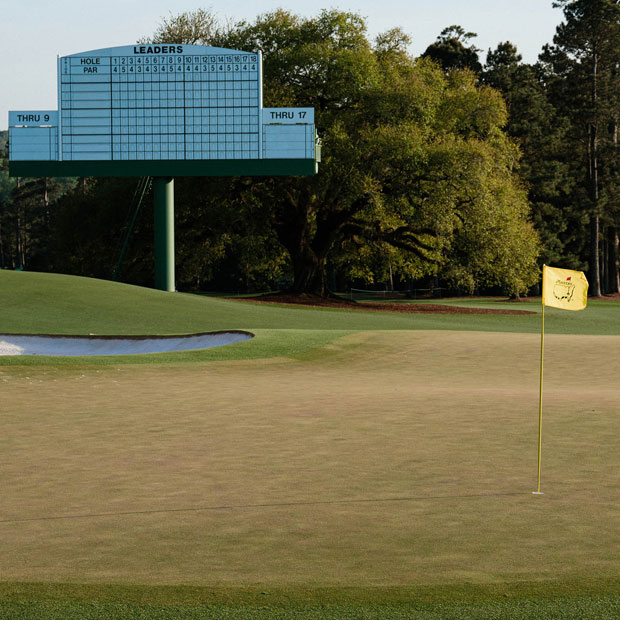
Every Hole at Augusta National - No. 18 Holly
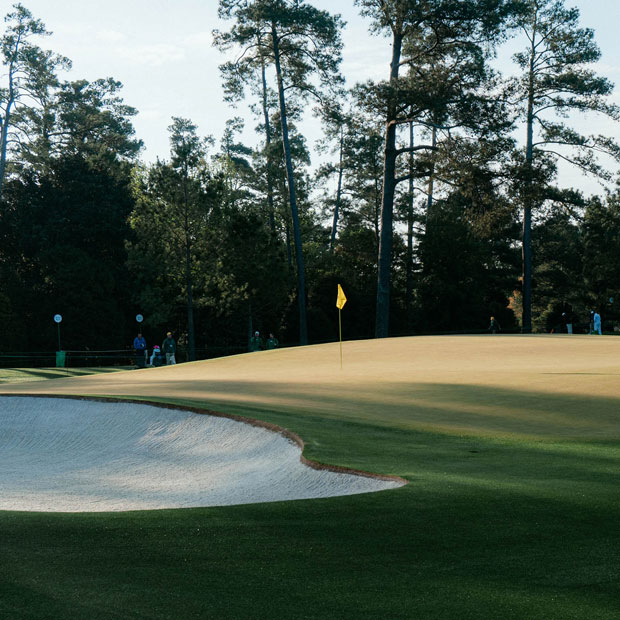
Every Hole at Augusta National - No. 17 Nandina
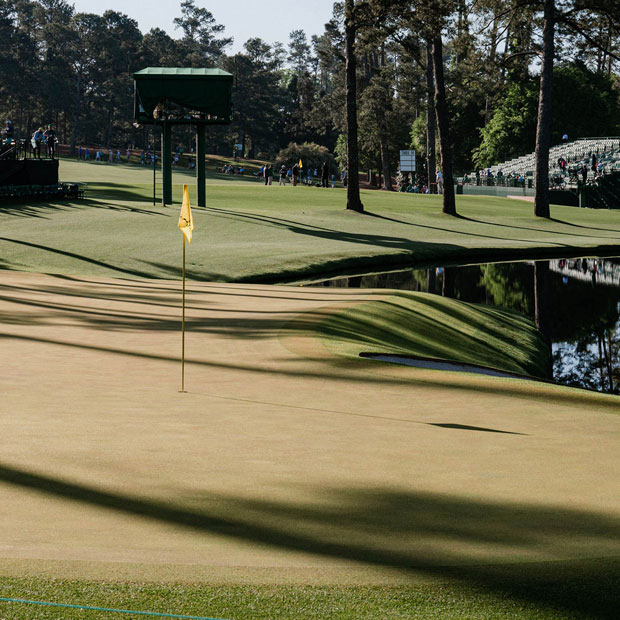
Every Hole at Augusta National - No. 16 Redbud
Get full access to exclusive benefits from Fried Egg Golf
- Member-only content
- Community discussions forums
- Member-only experiences and early access to events
Leave a comment or start a discussion
Lorem ipsum dolor sit amet, consectetur adipiscing elit. Suspendisse varius enim in eros elementum tristique. Duis cursus, mi quis viverra ornare, eros dolor interdum nulla, ut commodo diam libero vitae erat. Aenean faucibus nibh et justo cursus id rutrum lorem imperdiet. Nunc ut sem vitae risus tristique posuere. uis cursus, mi quis viverra ornare, eros dolor interdum nulla, ut commodo diam libero vitae erat. Aenean faucibus nibh et justo cursus id rutrum lorem imperdiet. Nunc ut sem vitae risus tristique posuere.