Every Hole at Augusta National - No. 4, Flowering Crab Apple
History, Masters strategy, and expert commentary on the par-3 fourth

The Basics
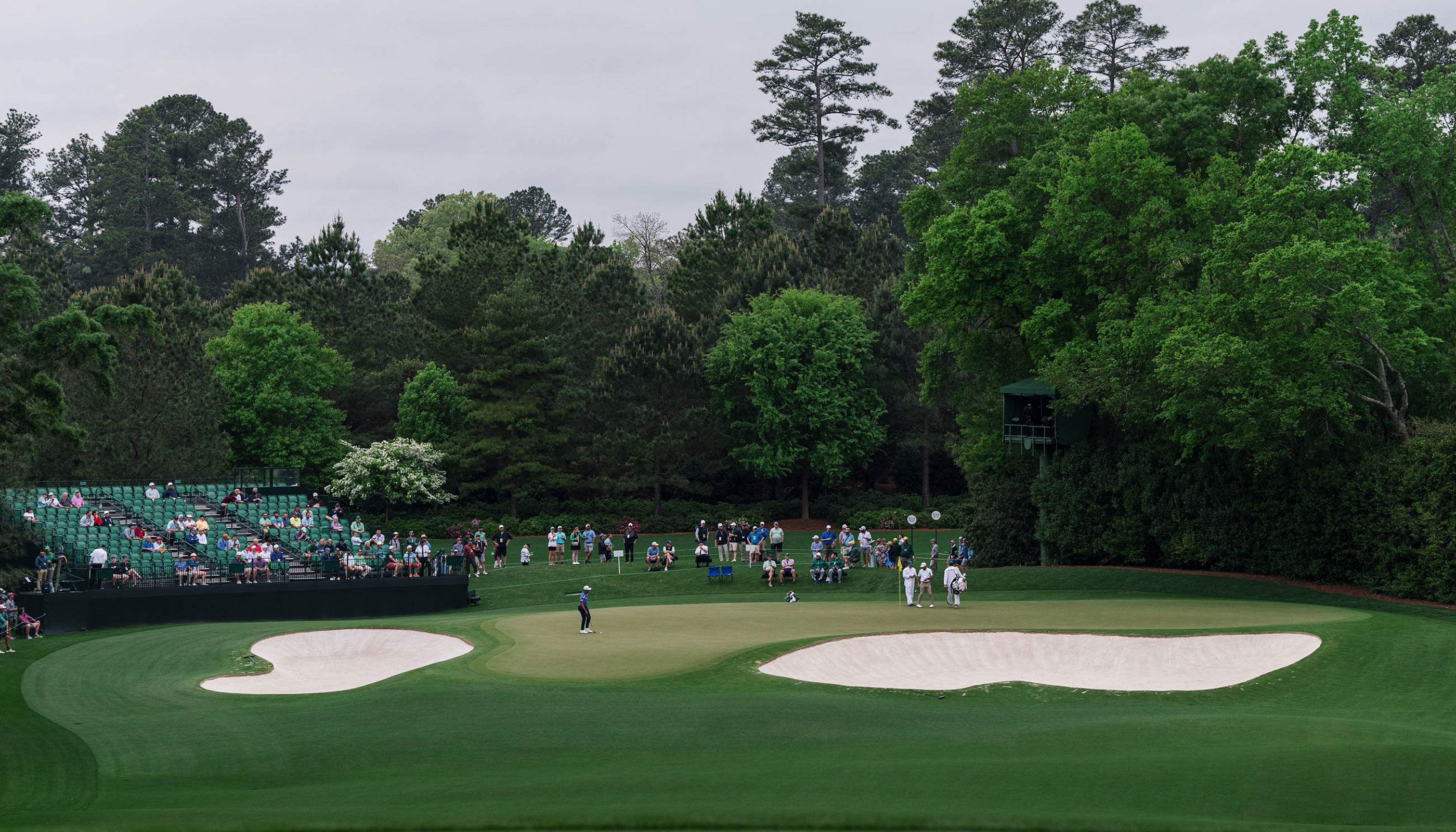
Par 3 | 240 yards
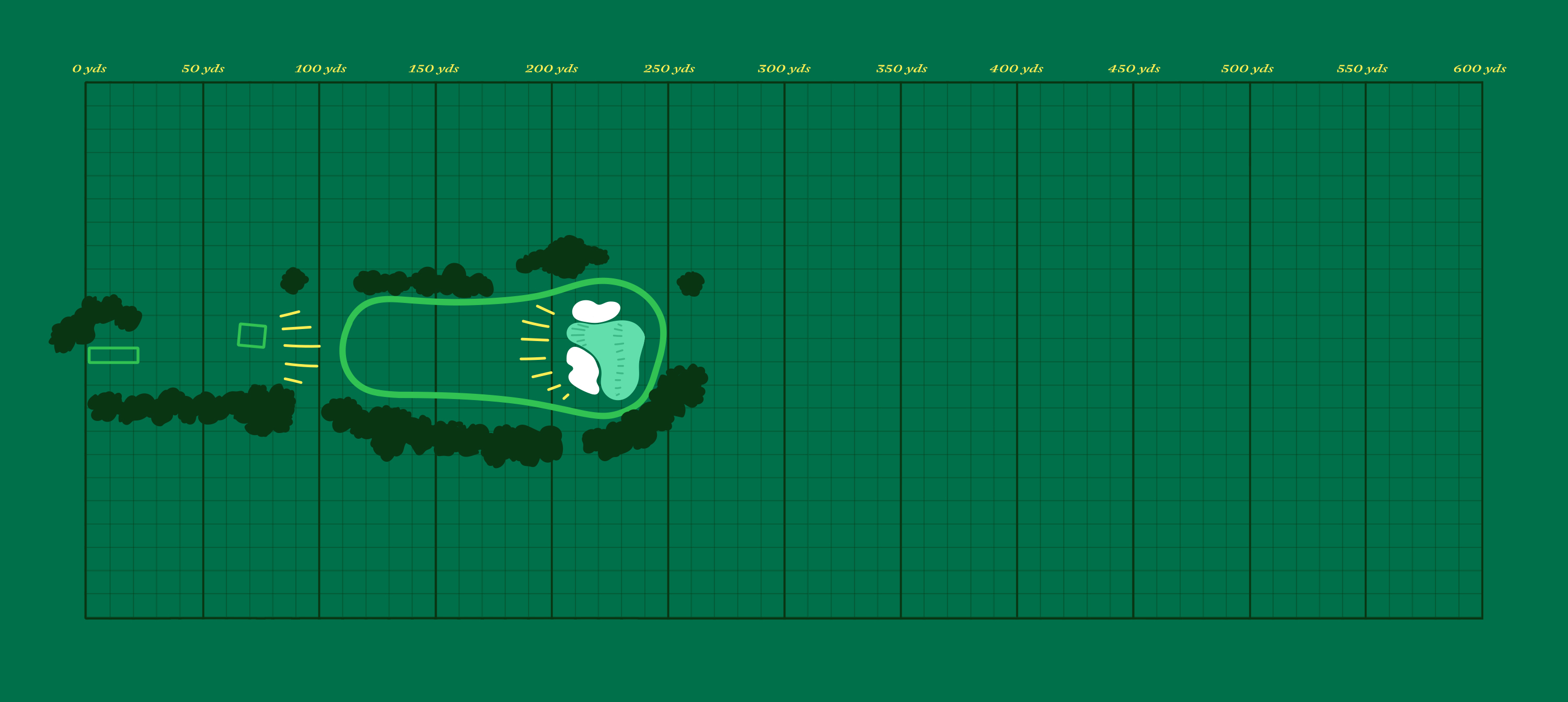
The first — and longest — par 3 at Augusta National has historically required a strong strike with at least a long iron, though club selections in the Masters have shifted as distance gains have spiraled out of control. Alister MacKenzie and Bobby Jones modeled the hole on the 11th at St. Andrews, emulating the back-to-front slope of the Eden template green and the positioning of the Strath (front) and Hill (left) bunkers. The land, however, is quite different: whereas the original Eden plays slightly uphill, No. 4 at Augusta National shoots downhill, exposing tee shots to swirling winds. Because of the tilt of the green, the hole is above all a test of distance control: short misses often end up in the bunkers, while long misses result in terribly difficult downhill putts and chips.
{{every-hole-augusta-national-4-flowering-crab-apple}}
History
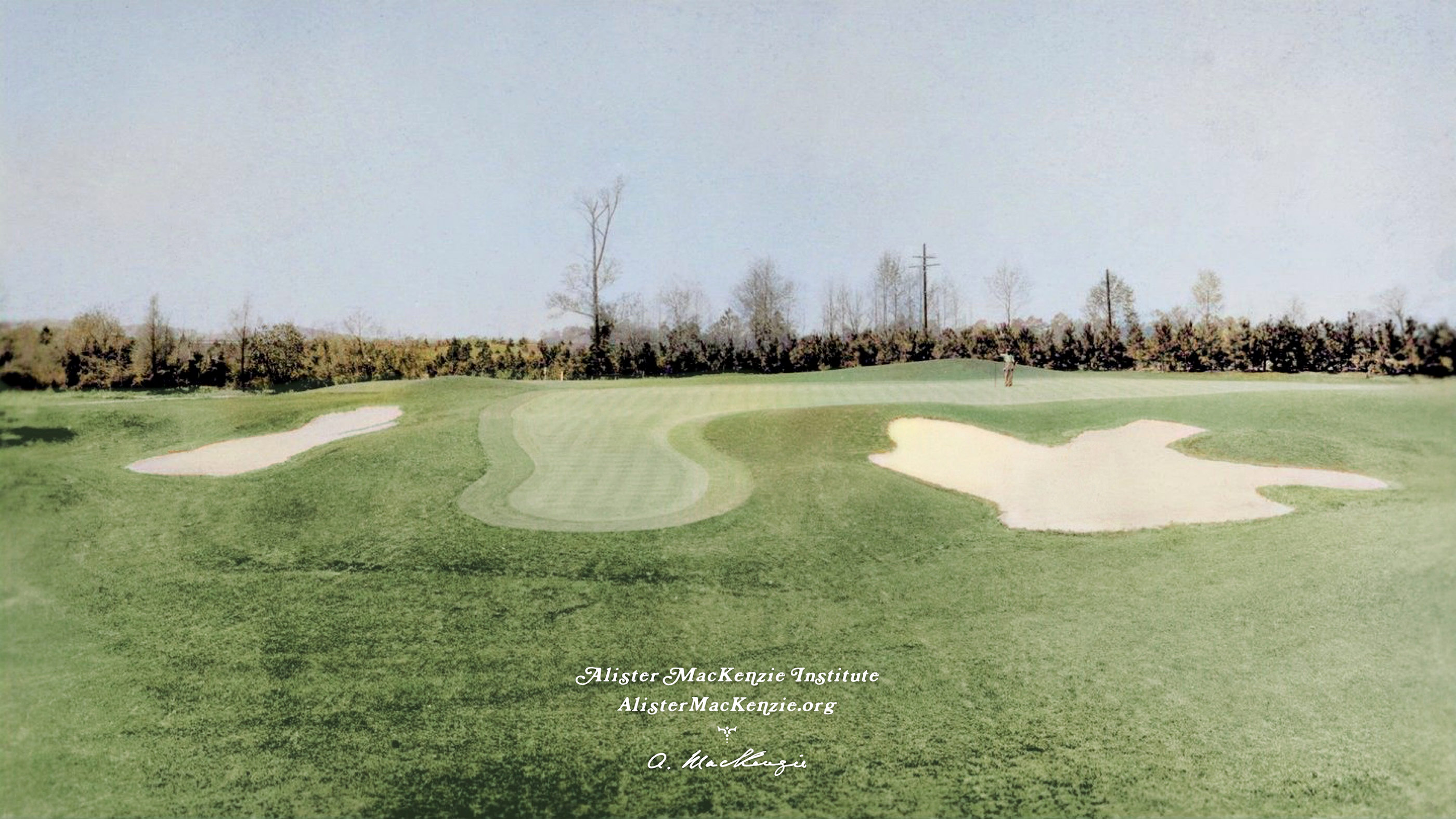
The fourth green had a far more prominent “boomerang” shape in 1934, with a narrower tongue jutting through the bunkers and a shallower back section. Perry Maxwell softened and broadened the green into approximately its current slope and shape in the late 1930s. The road behind the green — apparently MacKenzie and Jones’ stand-in for the Eden estuary — was rerouted between the 2018 and 2019 tournaments to make way for a new back tee on the fifth hole.
Strategy Notes for the Masters
The fourth hole’s primary challenge is its length: can you execute a towering shot with a long iron, hybrid, or fairway wood?
Strategically, the most compelling hole locations are in the narrow neck in the front section of the green. Because of the green’s slope and contour, a left miss to a front-left pin is deadly. Getting up and down from the front-right green-side bunker is much more manageable. –Joseph LaMagna
Our Take
No. 4 is one of the more unremarkable holes at Augusta National — stout (primarily because of its length), but not particularly exciting. As Fried Egg Golf’s Will Knights pointed out in 2023, the hole concentrates scoring around par and bogey, limiting both birdies and double bogeys. There are no true green-light pins, and the bunkers don’t generate terror worthy of the original Strath and Hill bunkers. As a result, “Flowering Crab Apple” does not tend to produce big moments of either glory or misery.
Expert Commentary
Alister MacKenzie (1932): “This is a very similar hole to the famous 11th (Eden) at St. Andrews. There have been scores of attempted copies of this famous hole but there is none that has the charm and thrill of the original. Most copies are failures because of the absence of the subtle and severe slopes which create the excitement of the original, and also because the turf is usually so soft that any kind of a sloppy pitch will stop. Previous failures, followed by, comparatively speaking, increasing success may have given us sufficient experience to warrant us in hoping that here at last we may have constructed a hole that will compare favorably with the original.”
Bobby Jones (1959): “The length of this hole can be varied a great deal, depending upon use of the back tee or the rear portion of the forward tee. From the back tee the shot is usually a strong iron or even a 4- or 3-wood. At tournament time in April there is very often a heavy wind on this hole, blowing directly against the player or quartering off the right. With the pin located immediately behind the bunker in front of the putting surface or on the high ground at the back of the green, a very precise judgment of distance is required to avoid either a long and difficult approach putt or an exacting chip. The green is so large that a shot played to the outer reaches more often than not will result in a bogey 4. The back tee is somewhat elevated so that the shot is exposed to the violence of any wind which may be blowing at the time. On some days the wind will place many players in the left-hand bunker or beyond.”
Memorable Shots
Jeff Sluman’s hole‑in‑one in 1992: Want to know how much the Masters has changed? No video exists of Sluman making a hole-in-one in the first round of the 1992 tournament, even though it’s the only hole-in-one ever made on the fourth hole. Sluman ended up finishing fourth that year, but his 4-iron from 213 yards has never been duplicated.
Phil Mickelson hitting from the bamboo (2012): It’s not an exaggeration to say that Mickelson would probably have a fourth green jacket if he hadn’t intentionally tried to hit the ball into the bunker left of the fourth green. Instead, the ball hit the grandstand railing, then bounced backward toward the woods. Mickelson was truly boned, but instead, after going back to the tee, he tried to hit a right-handed shot and could barely move the ball. When he was all said and done, he’d put a triple bogey on the card.
Course Routing
Click on a pin below to preview the hole or go to the full profile of the hole.
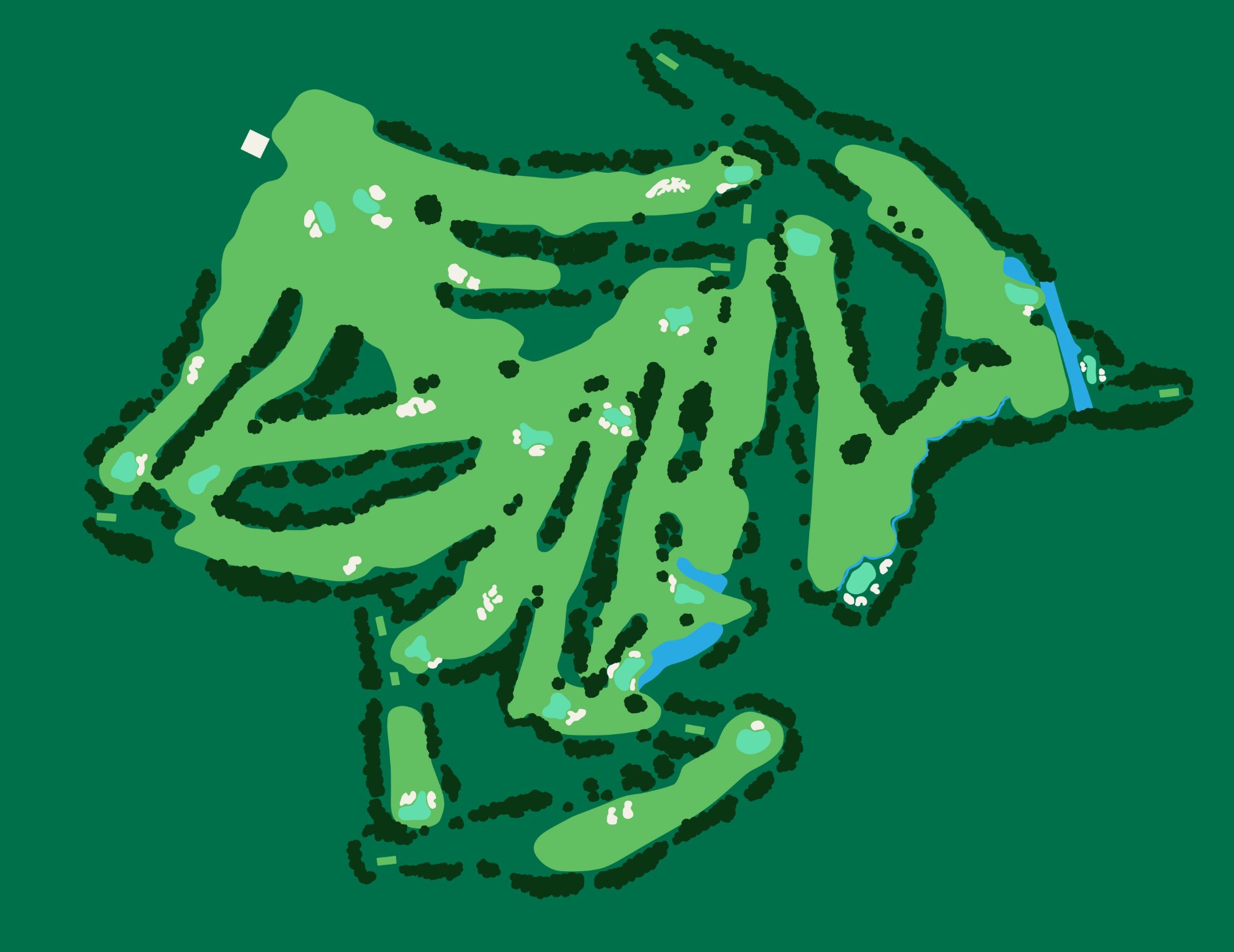
Augusta National
Ever since it opened, Augusta National has been in a constant state of evolution (for better or for worse), but it remains one of the greatest championship venues in the world
Hole 1 - Tea Olive
Augusta National's property is defined by a single broad downslope that ends at Rae’s Creek, and this par-4 opener is the only hole on the course that sits completely on top of it. Strategically, No. 1 at Augusta National is one of the most compelling opening holes in professional golf.
Hole 2 - Pink Dogwood
The second hole at Augusta National produces more off-the-tee variety than most par 5s in professional golf.
Hole 3 - Flowering Peach
Players face three basic options off the tee: hit a long iron or hybrid near the bunkers at the top of the first ridge, leaving a full wedge in; bash it left, past the bunkers and into the valley short left of the green; or go straight for the green in hopes of at least holding the narrow shelf short right. The most strategically complex hole on the golf course, “Flowering Peach” has stood the test of time, less affected by distance gains than most holes at Augusta National.
Hole 4 - Flowering Crab Apple
The first — and longest — par 3 at Augusta National has historically required a strong strike with at least a long iron, though club selections in the Masters have shifted as distance gains have spiraled out of control. Can you execute a towering shot with a long iron, hybrid, or fairway wood?
Hole 5 - Magnolia
“Magnolia” is like Paul Thomas Anderson’s film of the same name: brilliant, probably underrated, but a tad bloated. Nonetheless, the hole presents an honest challenge, and the green is one of the most artfully shaped at Augusta National (or anywhere else).
Hole 6 - Juniper
“Juniper” is, in our opinion, Augusta National’s second-best par 3. Each pin position presents a different range of challenges and exciting possible outcomes.
Hole 7 - Pampas
Yes, the green contours are fun, but “Pampas” has morphed into something that Alister MacKenzie likely would not endorse: a hole that merely defends itself through length and narrowness rather than asking complex strategic questions.
Hole 8 - Yellow Jasmine
This uphill three-shotter consistently produces the highest scoring average of Augusta National’s four par 5s, but it still presents a welcome birdie opportunity after the tough stretch of Nos. 4-7. “Yellow Jasmine” is the most underrated hole at Augusta National.
Hole 9 - Carolina Cherry
The ninth hole plays from a high point near the first and eighth greens, down through a valley frequently used by galleries, and up the hill where the clubhouse sits. From a risk-reward perspective, “Carolina Cherry” is a bit of a muddle.
Hole 10 - Camellia
The 10th hole kicks off the back half of the round in hair-raising fashion, plunging 100 feet into a valley shrouded by tall pines. Perry Maxwell’s 1938 transformation of “Camellia” is one of the rare cases in which a change to MacKenzie and Jones’s design represented a substantial improvement.
Hole 11 - White Dogwood
No. 11 is simply a brute, often playing as the most difficult hole to par at Augusta National. It’s also been one of the most frequently tinkered-with holes at Augusta National.
Hole 12 - Golden Bell
The focal point of Amen Corner and the center of gravity in any final round of the Masters, the 12th hole at Augusta National is as terrifying as it is beautiful.
Hole 13 - Azalea
This iconic risk-reward par 5 offers the first of a series of birdie opportunities on Augusta National’s home stretch.
Hole 14 - Chinese Fir
Although some nuances of MacKenzie and Jones’s original strategic concept for the hole have been lost, “Chinese Fir” is still a compelling par 4, rewarding precise and well-shaped shots both off the tee and into the green.
Hole 15 - Firethorn
No. 15 consistently presents one of the toughest decisions players have to make during their rounds: go for the green in two or lay up to one of the most demanding wedge shots in golf.
Hole 16 - Redbud
Set at the base of the ridge that the fifth green and sixth tee occupy, the par-3 16th hole provides a ready stage for championship-defining shots. Over the past several decades, the 16th has shown an undeniable knack for spectacle.
Hole 17 - Nandina
From tee to green, No. 17 is one of the simplest holes at Augusta National and is likely the least-loved hole on the second nine.
Hole 18 - Holly
“Holly” is a little funky, but its design is smart and elegant: bend it around the trees on the right and bypass some of the natural difficulty of the next shot.





Leave a comment or start a discussion
Engage in our content with thousands of other Fried Egg Golf Club Members
Engage in our content with thousands of other Fried Egg Golf Members


Q&A: Jeff Hicks, Superintendent at Rustic Canyon Golf Course
Every Hole at Augusta National: History, Masters Strategy, and More
Broomsedge Enters Partnership to Establish 'Welcoming Private Club' Model
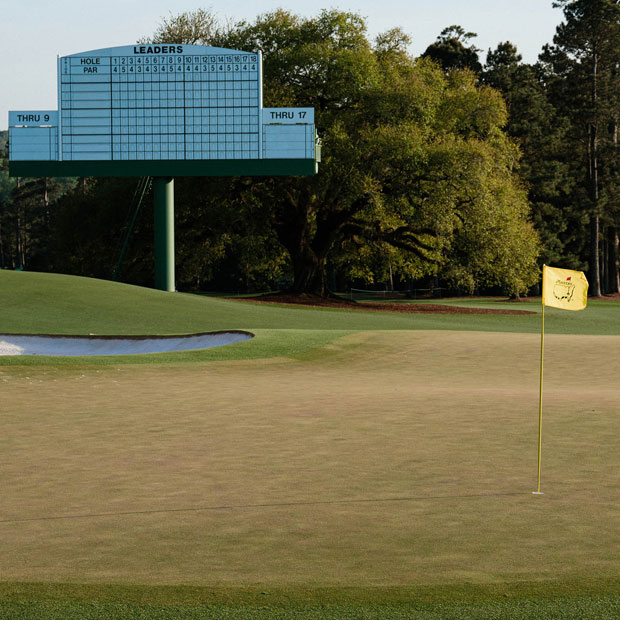
Every Hole at Augusta National - No. 18 Holly
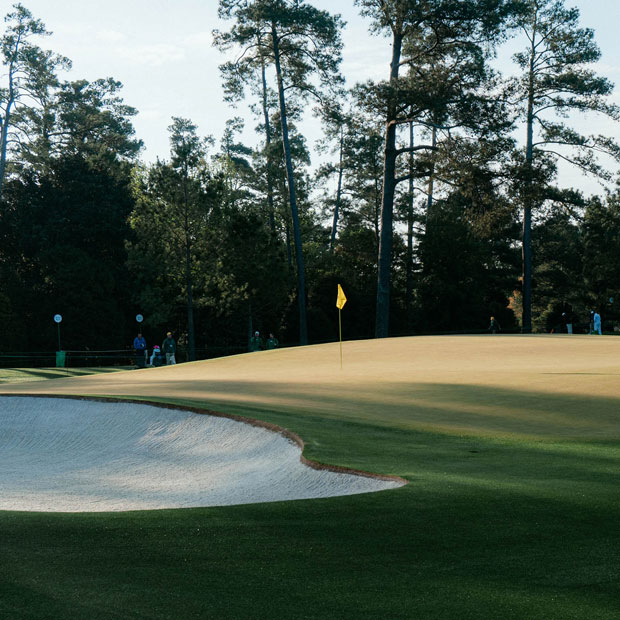
Every Hole at Augusta National - No. 17 Nandina
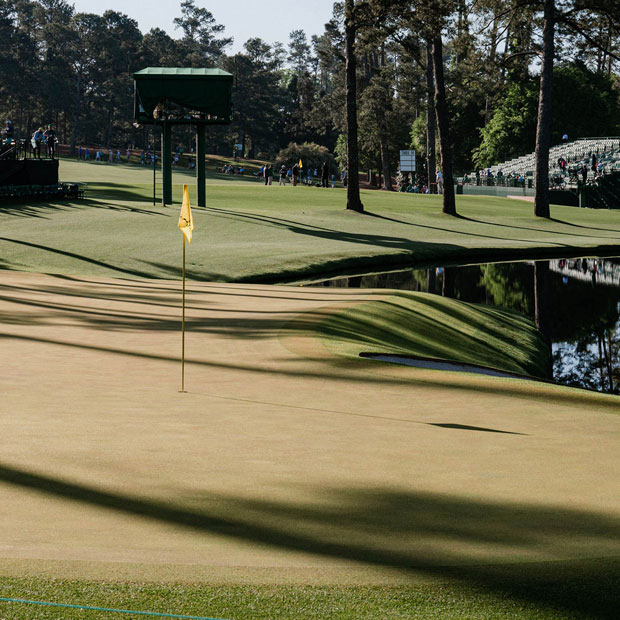
Every Hole at Augusta National - No. 16 Redbud
Get full access to exclusive benefits from Fried Egg Golf
- Member-only content
- Community discussions forums
- Member-only experiences and early access to events
Leave a comment or start a discussion
Lorem ipsum dolor sit amet, consectetur adipiscing elit. Suspendisse varius enim in eros elementum tristique. Duis cursus, mi quis viverra ornare, eros dolor interdum nulla, ut commodo diam libero vitae erat. Aenean faucibus nibh et justo cursus id rutrum lorem imperdiet. Nunc ut sem vitae risus tristique posuere. uis cursus, mi quis viverra ornare, eros dolor interdum nulla, ut commodo diam libero vitae erat. Aenean faucibus nibh et justo cursus id rutrum lorem imperdiet. Nunc ut sem vitae risus tristique posuere.